
Why Getting Dressed Feels Harder After a Big Life Change
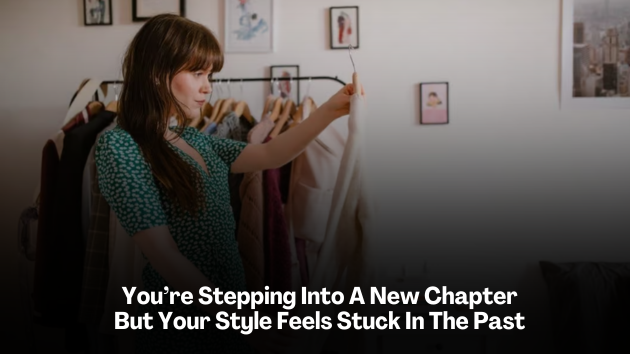
You open your closet. Nothing feels right. Not the dress, not the jeans, not even the hoodie you used to live in. Sound familiar?
If you've recently gone through a divorce, job loss, breakup, relocation, or loss of a loved one, and suddenly getting dressed feels like the hardest part of your day, you are not being dramatic. You are not lazy. You are human.
This is one of the most quietly common struggles people face after a life transition, and almost nobody talks about it.
Your Wardrobe Is a Psychological Map of Who You Were
Here's something most people never consider: your closet isn't just about clothing; it's a curated archive of your identity.
Every outfit you own was bought by a version of you, the career-driven you, the partnered you, the pre-grief you. When that version of you no longer exists, the clothes feel like costumes from a show that's been canceled.
Psychologists call this identity diffusion, a state where your sense of self becomes unclear or fragmented after a major role change. This leads directly to decision fatigue, low motivation, and emotional withdrawal from daily rituals, including something as basic as getting dressed.
Did You Know?
A study in the Journal of Experimental Social Psychology found that clothing directly influences cognition and emotional state, a concept called "Enclothed Cognition." What you wear shapes how you think, feel, and perform. Losing your style identity hits far deeper than it looks.
Which Life Changes Hit Your Wardrobe the Hardest?
Not all life changes affect your relationship with clothing equally. Here's how the most common transitions create wardrobe paralysis:
- Divorce or Breakup: Clothes tied to "couple identity" feel emotionally loaded or simply wrong. They belong to a relationship that no longer exists.
- Job Loss or Career Change: Your work wardrobe loses its entire purpose overnight. With no role to dress for, the whole closet feels pointless.
- Grief or Bereavement: Mental and emotional bandwidth is fully consumed. Even the smallest decision, like choosing a top, can feel exhausting and impossible.
- Postpartum or Motherhood: Body changes and identity shifts happen simultaneously, creating a deep disconnect from the pre-baby self you used to dress.
- Relocation or Moving: Your style was built around a lifestyle and environment. A new city or country can make your entire wardrobe feel irrelevant overnight.
- Illness or Recovery: Clothes become reminders of a body that feels unfamiliar, triggering grief for the physical self you once knew.
If you saw yourself in even one of those points, keep reading. This next part explains why it happens, not just that it happens.
The Science Behind the Struggle
When you go through a major life change, your brain enters what neuroscientists call a threat-adaptive state. The prefrontal cortex — responsible for decision-making and creativity — becomes less active, conserving energy for emotional survival.
This explains three very real wardrobe behaviors most people quietly experience:
- The "same outfit" loop: You reach for the same 2–3 pieces daily because novelty feels mentally threatening
- Mirror avoidance: Looking at yourself triggers grief or anxiety connected to who you used to be
- Joyless impulse shopping: You buy for the person you wish you were, but the new clothes still feel wrong
The Paradox of Choice:
Psychologist Barry Schwartz's landmark research found that more options = more stress, not more freedom. The average wardrobe contains 77 items, yet most people regularly wear only 20% of them. After a life change, this gap widens dramatically, turning a full closet into a daily source of anxiety.
How to Start Getting Dressed Again
You don't need a full wardrobe overhaul. You need one small act of intentional dressing per day. Here's a practical, psychologically grounded approach:
Step 1: Build Your "Transition Capsule" (Week 1)
Choose 5–7 pieces that feel physically comfortable and emotionally neutral, no nostalgia attached, no "I should wear this." Just ease. These become your daily default and eliminate the morning decision spiral entirely.
Step 2: Do a Conscious Release (Week 2)
Sort your wardrobe into three intentional piles:
- Keep: Feels like you, right now
- Store: Too emotionally loaded to decide on yet
- Release: Belongs to a chapter that's clearly closed
This is not about minimalism. It's about grieving your old identity with intention, not avoidance.
Step 3: Dress for the Feeling You Want (Week 3 onward)
Ask yourself each morning: "How do I want to feel today?" not "What should I wear?"
- Want to feel capable? → Structured silhouettes, clean lines
- Want to feel safe? → Soft textures, familiar neutrals
- Want to feel like yourself again? → One item you genuinely love, even if it's just your socks
Step 4: Reintroduce Color Slowly
Color psychology research shows that blue tones reduce cortisol (the stress hormone), while warm neutrals support emotional grounding. You don't need to be bold about it, even a colorful scarf or a warm-toned bag is a meaningful first step.
When Getting Dressed Becomes an Act of Self-Care
Here's the reframe that changes everything:
Getting dressed after a life change is not about looking good. It's about showing up for yourself on the hardest days.
The simple act of choosing an outfit, even one, sends a clear signal to your brain that you are still here. Still a person with preferences, comfort needs, and a self worth dressing.
"Clothes are a way of living." — Karl Lagerfeld
Style after loss isn't a luxury. It's a quiet, powerful form of healing and at FashionMagazine, we believe fashion serves the human being first, always.
FAQs
Q1: Why do I have no motivation to get dressed after a breakup or divorce?
After a breakup or divorce, your wardrobe is emotionally tied to the identity you built within that relationship. Your nervous system enters a low-energy, protective state that reduces motivation for self-expression. This is a completely normal psychological response to identity loss, not laziness. Start with a 3-piece comfort capsule and build from there.
Q2: Can clothing actually affect your mental health during a life transition?
Yes, significantly. The concept of enclothed cognition, supported by research in the Journal of Experimental Social Psychology, confirms that clothing influences mood, cognitive performance, and self-perception. Even one intentional clothing choice per day during a difficult period can support emotional regulation and slowly rebuild confidence.
Q3: How do I rebuild my wardrobe identity after a major life change?
Start with a "Transition Capsule" of 5–7 emotionally neutral, physically comfortable pieces. Release items tied to your old role when you feel ready, not on a deadline. Focus on how clothes make you feel, not how they appear to others. Style identity rebuilds slowly and non-linearly, and that is perfectly okay.
Your Closet Isn't Broken. You're Just Becoming Someone New
Change doesn't arrive with instructions, and neither does the version of you that comes after it. The mornings that feel impossible, the outfits that no longer fit who you are, the closet that suddenly feels like a stranger's, none of that means you've lost yourself. It means you're in the middle of finding someone new