
The Psychology of Colour: What You Reach For on Bad Days and Why
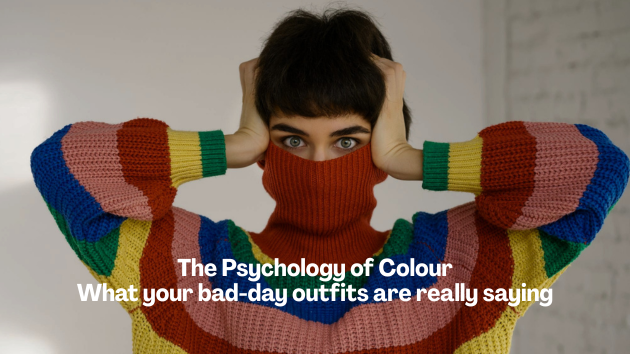
Ever notice how on some days you grab your brightest top, and on others you just want to disappear into black?
That’s not random. That’s your brain using colour as emotional self-defence.
The colours you reach for on bad days can quietly reveal how you’re feeling and what you’re craving inside: comfort, control, attention, safety, or a reset. This isn’t about strict rules or fake colour horoscopes. It’s about patterns. The ones you repeat without even noticing.
Let’s break down what’s really going on when you stand in front of your wardrobe and think, God, I just can’t today.
Why Colour Hits Different When Your Mood Is Low
When you’re having a bad day, your brain is already tired. You’re stressed, annoyed, anxious, or just off. In that state, you don’t have the energy for complicated choices. So you reach for colours that feel:
- Safe (you can hide a bit)
- Comforting (you feel held, not exposed)
- Empowering (you feel stronger than you actually do)
- Distracting (you want your outfit to carry the mood you don’t have)
Colour becomes a shortcut for coping. You don’t sit there thinking, I’m sad, so I’ll wear navy. You just do it and feel a tiny bit better.
1- Black: The Emotional Shield
On bad days, black is often the first thing people grab. Not because they’re “goth” or dramatic, but because black does three very practical things:
- It hides: body, mood, and sometimes eye bags.
- It simplifies: no thinking, no matching, just done.
- It protects: it feels like emotional armour.
Psychologically, black can mean you want to keep your feelings in and the world out. It says, I’m here, but don’t come too close.
If you always reach for black on hard days, it might be your way of:
- Taking control when everything feels messy
- Opting out of standing out
- Conserving energy by not performing happiness
You’re not being dramatic. You’re self-protecting.
2- Grey, Beige, and Neutrals: “Don’t Look at Me Too Much” Mode
When you’re exhausted, burned out, or socially drained, neutrals like grey, taupe, and beige feel safe. They’re soft, quiet, and low-effort.
Neutrals on bad days often mean:
- You don’t want to attract attention
- You want to blend, not stand out
- You’re craving calm and emotional “background noise”
These colours send a message: Today I just want to be. Not impressive. Not bold. Just okay. And that’s valid.
3- Blue: The Calm You’re Trying to Borrow
Light blue, denim, and navy blue are some of the most common comfort colours. It’s linked in people’s minds with calm skies, oceans, trust, and stability.
Reaching for blue on hard days often means you are:
- Looking for peace or mental quiet
- Trying to feel more grounded and stable
- Using colour to soften stress or anxiety
A navy shirt, light blue sweater, or denim outfit can feel like a visual sigh of relief. You’re not trying to stand out. You’re trying to soften the edges of your day.
4- White and Off-White: The Need for a Reset
On some bad days, you don’t go dark at all. You go light. White, cream, or off-white outfits can feel like a restart button.
These colours can mean you’re craving:
- A fresh start
- Clarity after chaos
- Clean, simple energy
Wearing white on an off day can be your way of saying, Today I need a clean slate. I want less noise. It doesn’t mean you’re happy. It means you want space in your head.
5- Bright Red and Coral: “Fake It Till I Feel It”
On certain bad days, you might grab red lipstick, a bold top, or a bright bag. You don’t feel powerful, but you dress as if you do.
Red and bright coral are often chosen when you:
- Feel small, invisible, or ignored
- Want to push yourself out of a slump
- Need an energy boost you don’t naturally have
Red gives “I’m here” energy, even if inside you want to lie face down on the bed. It’s a performance colour, and sometimes performing confidence is the first step to feeling it.
6- Pink and Soft Pastels: Comfort and Gentleness
On emotional days, many people reach for soft pinks, lilacs, or other gentle pastels. These colours feel like a hug.
They can signal that you’re craving:
- Comfort and softness, from the world and from yourself
- A break from harshness or criticism
- Something that feels kind, not demanding
Pastels don’t shout. They say, “Let’s be gentle today.” When you put them on, you’re often trying to invite more kindness into your day, even if it’s just from your own reflection in the mirror.
7- Earth Tones: Wanting To Feel Grounded
Browns, olives, rust, and warm, earthy shades often show up when you feel unsteady or overwhelmed. These colours are linked in our minds with nature, warmth, and stability.
Reaching for earthy tones can mean you want:
- To feel rooted, not scattered
- Something steady and low-drama
- Warmth without brightness
Earth tones feel like emotional grounding. They don’t demand anything from you. They just sit quietly and support.
8- Yellow: Chasing A Little Bit Of Light
On low-energy or meh days, some people reach for yellow when they’re craving warmth and hope. It’s linked to sunlight, optimism, and playfulness.
Reaching for yellow can mean you’re trying to:
- Lift your own mood, even if it’s just slightly
- Add a bit of brightness when life feels dull
- Remind yourself that not everything is heavy
Soft, butter yellows feel gentle and comforting. Bright yellow is more “wake up, let’s go.”
9- Green: Wanting Balance And Relief
Green is often tied to nature, balance, and recovery. On stressful days, you might grab green when you’re desperate for a mental break.
Choosing green can mean you want:
- A sense of emotional balance
- Calm without feeling sleepy
- A fresh start without the starkness of white
Softer greens (sage, pistachio, olive) feel especially grounding when your mind is crowded.
10- Purple: Needing Space And Self-Protection
Purple, especially deeper or muted shades, often shows up when you want space from people or from demands. It has a quiet “don’t disturb my inner world” energy.
On tough days, purple can mean you’re craving:
- Emotional distance from drama
- Time with your own thoughts
- A reminder of your individuality when you feel lost
Soft lavender can feel soothing, while deeper purples feel more private and introspective.
Patterns vs Solid Colours: Do You Want to Disappear or Distract?
On bad days, some people avoid patterns completely. Others suddenly grab prints. That contrast comes down to how you cope:
- Solids on bad days:
You want simple. You want low noise. You don’t want your clothes to ask questions or attract comments. - Patterns on bad days:
You might want your outfit to “carry the personality” you don’t have the energy to show. It’s like outsourcing your mood to your clothes.
Neither is right nor wrong. It’s just two different emotional strategies.
How To Use This Awareness To Feel Better, Not More Judged
This isn’t about diagnosing yourself by T-shirt colour. It’s about noticing patterns so you can use them intentionally instead of automatically.
Try this:
- Step 1: Notice what colour you reach for on bad days.
- Step 2: Ask yourself, “What do I want today? To hide, to feel safer, to feel calmer, to feel stronger?”
- Step 3: Dress to support that. Not to impress anyone.
You can even build a tiny bad day palette in your wardrobe:
- A shield outfit for when you want to hide (black, navy, simple lines)
- A soft outfit for when you need comfort (neutrals, pastels, loose fabrics)
- An energy outfit for when you need a push (red accents, bold lipstick, a strong top)
Instead of fighting your mood, dress in a way that helps you handle it.
Final Thoughts
What you reach for on bad days isn’t random. It’s your brain quietly picking colours that match what you need: safety, calm, softness, strength, or space. Colour won’t fix your problems, but it can support your mood, create a little emotional buffer, and make tough days feel just a bit more manageable.
So next time you grab that black hoodie, the pastel sweater, or the bright red top, don’t overthink it. Just notice it. Your wardrobe might be telling you exactly what you’re craving.
FAQs
Is there any right colour to wear on a bad day?
No. There’s no single correct colour. What matters is how a colour makes you feel. Some people feel safe in black, others feel better in soft pastels or calm blues.
Does wearing black always mean I’m sad or depressed?
Not at all. Black can mean you want to feel put-together, protected, or low-key. It often works as emotional armour, especially on days when you don’t want extra attention.
Why do I dress in bright colours even when I feel terrible?
That’s common. Bright colours like red, coral, or yellow can be a way to fake energy or confidence. Sometimes we dress how we want to feel, not how we actually feel.
Can colour really affect my mood, or is that just a myth?
Colour won’t fix deep problems, but it can influence how you feel in small ways. Calmer tones can soothe, brighter tones can energise, and darker tones can help you feel more protected or in control.
How can I use colour more intentionally on bad days?
Notice your patterns first. Then create a small bad day wardrobe: darker outfits for when you want to hide, soft neutrals for comfort, and one or two bright pieces for when you need a little push.
What if I don’t feel anything special about colours at all?
That’s okay too. Not everyone is strongly affected by colour. You might respond more to fabric, fit, or comfort. Colour psychology is a tool, not a rulebook. Use it only if it helps you.