
The Original Quiet Luxury: How Aristocratic Dressing Became a Modern Aesthetic
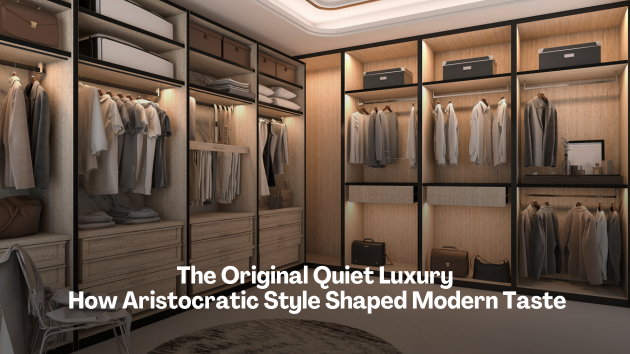
Quiet luxury feels like a very current idea. Neutral outfits, minimal logos, tailored pieces that look expensive without trying too hard, it’s often framed as a reaction to loud branding and fast fashion.
But none of this is actually new.
Long before quiet luxury became a trend, it was already a way of dressing. It just wasn’t labeled, packaged, or marketed. It existed as part of aristocratic style, where clothing worked less as a performance and more as a quiet signal of belonging.
Aristocratic dressing was about belonging, not attention
Aristocratic style was never designed to stand out as modern fashion often does. It was built around the idea that if your social position is already secure, you don’t need to prove it through what you wear.
That mindset shaped everything from color choices to silhouettes.
Instead of chasing visibility, the goal was consistency. Clothes were expected to feel appropriate, well-made, and understated—nothing too trend-driven, nothing too loud, and nothing that looked like it was trying too hard.
That is where quiet luxury’s core idea comes from: not minimalism for the sake of aesthetics, but restraint as a form of confidence.
What aristocratic style actually looked like
Aristocratic dressing is often simplified as “basic” or “plain,” but in reality, it was very specific in how it came together. The focus was less on individual pieces and more on how everything fit, lasted, and worked as a whole.
A typical wardrobe relied on:
- structured blazers and coats with clean shoulders
- crisp shirts in high-quality cotton or silk
- wool trousers and skirts that held their shape over time
- knitwear in cashmere or fine wool
- leather shoes that were maintained, not constantly replaced
The color palette stayed controlled, usually within:
- navy
- beige
- cream
- charcoal
- muted greens and browns
Nothing was meant to grab attention immediately. The impact came from how consistent and well put-together everything looked over time.
Subtlety worked as a kind of status language.
In aristocratic circles, clothing functioned almost like a quiet code. The less obvious something was, the more it signaled.
Anyone could wear something flashy. But recognizing quality — fabric, tailoring, longevity — required familiarity. It required being part of that world.
That’s why subtle details mattered more than statement pieces.
Things like:
- how a blazer sits at the shoulder
- how a fabric drapes instead of clings
- whether shoes are polished but slightly worn-in
- how often a piece is repeated instead of replaced
These weren’t just styling choices. They were signals.
Modern quiet luxury borrows heavily from this idea, even if it presents it more as an aesthetic than a social code.
Why logos were never the focus
One of the clearest differences between aristocratic dressing and modern fashion culture is how branding is treated.
Logos were rarely visible, and in many cases, deliberately avoided. Not because brands didn’t matter, but because they didn’t need to be displayed outwardly.
Status came through things that were less immediate:
- fabric quality
- construction
- fit
- longevity
If someone recognized the piece, it was because they already knew what they were looking at. If they didn’t, the outfit still worked without that recognition.
That idea shows up almost directly in quiet luxury today: clothing that looks expensive, but doesn’t rely on obvious branding to communicate it.
How quiet luxury became a modern aesthetic
For a long time, this way of dressing stayed in the background. It wasn’t marketed or turned into a trend because it didn’t need to be.
That changed more recently.
Part of it comes down to fatigue. After years of logo-heavy fashion, fast trends, and highly styled outfits, a quieter way of dressing started to feel appealing again.
You can see that shift in:
- The popularity of neutral wardrobes
- renewed interest in tailoring
- a focus on “investment pieces.”
- styling that feels less layered and more intentional
Pop culture also played a role. Shows like Succession made understated wealth visible in a way that felt aspirational but different from traditional luxury imagery.
But more than anything, quiet luxury took off because it offered something people were missing: clothes that feel stable, repeatable, and not tied to constant change.
What modern quiet luxury gets right (and where it falls short)
Quiet luxury today is clearly influenced by aristocratic dressing, but it doesn’t always carry the same intent.
What it gets right:
- prioritizing quality over quantity
- focusing on fit and tailoring
- moving away from obvious branding
- encouraging longer-term wardrobe thinking
Where it sometimes falls short:
- turning subtlety into a uniform (everything starts to look the same)
- treating it as a trend instead of a mindset
- assuming expensive automatically means well-made
- losing personality in the process
Aristocratic style was restrained, but it wasn’t empty. It still had variation, context, and individuality within its boundaries.
That’s the part modern quiet luxury sometimes misses.
Final thoughts
Quiet luxury didn’t appear out of nowhere. It’s a modern reinterpretation of something that already existed, just in a different context.
Aristocratic dressing was never about minimalism as an aesthetic choice. It was about dressing in a way that didn’t need explanation. The clothes worked quietly, consistently, and without drawing unnecessary attention.
Today’s version borrows the look, but not always the logic behind it.
And maybe that’s the real difference.
Because true quiet luxury was never about dressing simply, it was about dressing in a way that didn’t need to say much at all.