
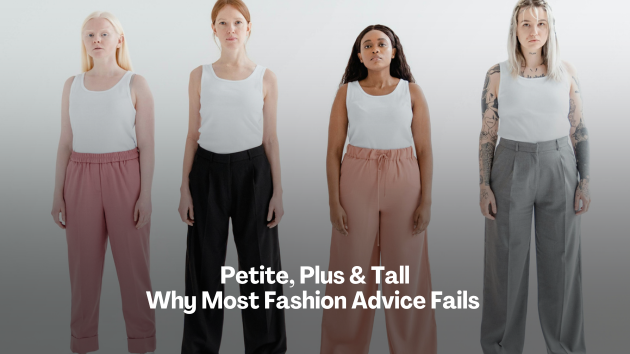
Fashion loves to talk about inclusivity. Shopping advice, not so much.
Most style guides still quietly assume one standard frame, then tack on a rushed section for everyone else at the bottom. A few tips for petites. A couple of lines for tall women. One vague paragraph for plus-size shoppers, usually built around “flattering” rules nobody asked for. Done.
That is exactly the problem.
Petite, tall, and plus-size shoppers are still too often treated like editing notes in fashion content instead of the audience itself. The result is advice that feels generic, outdated, and deeply unhelpful. Not because these shoppers need “special treatment,” but because they need the same thing everyone else does: guidance that starts from where they actually are.
A good shopping guide should not make you feel like a complication. It should make you feel understood.
The real issue is not body difference. It is lazy default thinking.
Most mainstream shopping content is built around an unspoken sample-size logic. Clothes are described on a narrow range of bodies, modeled on a narrow range of heights, and explained with a narrow idea of what “good fit” looks like.
So when brands or publishers try to expand the conversation, they often do it reactively. Instead of building body-specific guidance into the core of the content, they create side categories that feel separate from the main fashion story.
You see it everywhere:
- petite edits filled with clothes that are merely “small,” not proportioned properly
- tall sections that offer longer hems but ignore waist placement, sleeve length, and rise
- plus-size shopping advice obsessed with hiding the body instead of dressing it well
That is not thoughtful styling. That is fashion administration.
Real inclusivity is not adding a filter. It is changing the starting point.
Petite shoppers do not just need shorter clothes
Petite dressing is still one of the most misunderstood categories in fashion. People hear “petite” and immediately think “small,” when in reality it is about height and proportion, not thinness.
A useful petite shopping guide should focus on more than just hemlines. What matters is whether the whole garment is proportioned for a shorter frame.
What that actually looks like:
- Shoulders that fit properly
A blazer can be the right length and still look off if the shoulders are too broad. - Waist placement that lands where it should
A dress may be technically wearable, but if the waist hits too low, the whole shape can feel wrong. - Print and detail scale that makes sense
Oversized prints, huge buttons, or extra-long lapels can overwhelm a shorter frame. - Rise and inseam that work together
Higher-rise trousers often help create better balance, especially when paired with the right hem length. - Sleeve length and overall cut
These small details can completely change whether a piece looks intentional or just slightly off. - Oversized pieces with structure
Petite shoppers can absolutely wear volume, but it usually works best when there is some shape or proportion keeping it from swallowing the frame.
That is why genuinely useful petite advice is about proportion, not restriction. It helps petite shoppers understand what to look for, instead of telling them what to avoid.
And that difference matters. Because good guidance treats petite shoppers as style-conscious people who want great fit and real options, not as bodies that need to be “balanced out.
Tall shoppers do not want gratitude scraps
Tall fashion advice often gets reduced to one thing: add more inches. But tall shoppers already know that length alone does not solve the problem.
A useful tall shopping guide should understand that fit is about overall proportion, not just making clothes longer.
What that actually looks like:
- Sleeves that are actually long enough
A jacket can fit well through the body and still look incomplete if the sleeves stop too short. - Trousers with the right inseam and rise
Extra length matters, but so does where the waist sits and how the leg line falls overall. - Dresses that keep their intended shape
A mini, midi, or maxi can completely change character on a taller frame if the proportions are off. - Waistlines and seam placement that sit correctly
When those details land too high, the whole garment can feel slightly “off,” even if the size is technically right. - Longline silhouettes that work with height, not against it
Tall shoppers do not always need to “break up” their frame. Long coats, column dresses, and full-length trousers can look incredibly strong when designed properly. - Freedom to lean into height instead of minimizing it
Not every tall shopper wants tricks to look shorter. Many want styling advice that embraces presence, drama, and clean vertical lines.
Plus-size shoppers deserve better than “flattering” language
Few categories have been more damaged by bad shopping advice than plus-size fashion.
For years, plus-size shoppers were handed the same script:
- wear black
- define the waist
- avoid volume
- minimize this
- distract from that
It was framed as helpful advice, but the message underneath was clear: style was welcome, as long as it looked like an apology.
That mindset still lingers, even when the wording sounds softer.
A shopping guide that does not feel like an afterthought has to reject the idea that plus-size dressing is mainly about visual correction. The goal is not to make the body look smaller. The goal is to help the person wearing the clothes feel good, look sharp, and find pieces that actually work for their life.
What that kind of advice should focus on:
- Fit that goes beyond the label
Brand size charts, cut, stretch, and construction usually matter more than the number on the tag. - Fabrics that change how a piece feels and falls
Some materials hold structure, some skim the body, and some cling. That affects comfort and shape far more than generic “flattering” rules. - Rises and proportions that support comfort
The right rise can change how trousers, skirts, and denim feel throughout the day, not just how they look. - Tailoring that makes clothes feel intentional
Small adjustments can turn a decent piece into one that actually fits and feels considered. - Freedom to wear both volume and shape
Oversized silhouettes and body-skimming pieces can both work beautifully. Neither should be treated like a rule. - Style without fear
Bold color, low-rise trousers, wide-leg denim, structured shirting, sheer layers, maximalism, minimalism, and statement dressing should all be part of the conversation.
What better shopping guides would actually do
The best guides do not separate people from fashion. They translate fashion for real bodies.
That looks like:
- recommendations based on proportion and construction, not body shame
- outfit formulas that feel modern, not corrective
- actual notes on fit, fabric, rise, sleeve length, and silhouette
- model imagery that shows clothes on more than one type of body
- advice that assumes the reader wants style, not just camouflage
Most of all, a better guide sounds different. It does not speak in warnings. It speaks in options.
Instead of “avoid wide-leg pants if you’re petite,” it asks what rise, hem, and fabric make them work beautifully. Instead of “plus-size women should stick to dark colors,” it talks about color confidence, balance, and personal taste. Instead of “tall girls should be careful with long hemlines,” it shows how powerful those hemlines can look when proportion is right.
That shift sounds small. It is not. It changes the emotional experience of getting dressed.
The future of fashion advice is body-aware, not body-limited
Petite, tall, and plus-size shoppers do not need pity categories or watered-down trend reports. They need to be centered in the conversation from the start.
Because the truth is, there is no universal body from which everyone else deviates. There are just bodies. Different heights. Different proportions. Different relationships to fit, comfort, visibility, and style.
So no, petite, tall, and plus shoppers do not need fashion to “include” them as an afterthought. They need fashion media, brands, and retailers to catch up with what they have always known: good style advice starts with the person wearing the clothes, not the sample size they were never meant to fit into.
FAQs
Why do most shopping guides feel unhelpful for petite, tall, and plus-size shoppers?
Because many are still written around one default body type, then lightly adapted for everyone else. That leads to vague advice instead of guidance built around real proportions, fit needs, and style preferences.
What makes a shopping guide feel thoughtful instead of tokenistic?
A thoughtful guide focuses on proportion, fit, fabric, and styling options in a way that respects the shopper’s body as normal, not secondary. It offers practical detail without turning everything into a rulebook.
Is petite the same thing as being small or slim?
No. Petite refers to height and proportion, usually for people 5'4" and under. A petite shopper can be slim, mid-size, or plus-size. Good petite advice should reflect that.
What do tall shoppers need beyond extra length?
They often need better proportion overall: longer rises, adjusted waist placement, better sleeve lengths, and silhouettes designed to work with height rather than just adding inches to standard garments.
Why is “flattering” often a red flag in plus-size advice?
Because it is frequently used as coded language for shrinking, hiding, or correcting the body. Helpful style content should focus on fit, expression, and comfort, not making someone take up less space.
Can one brand really serve petite, tall, and plus-size shoppers well?
It can, but only if inclusivity is built into design, fit strategy, and imagery from the beginning. Extending sizes or lengths alone is not enough if the cuts still assume one standard body.