
Greenwashing Alert: When Resale Brands Market Sustainability but Miss the Point
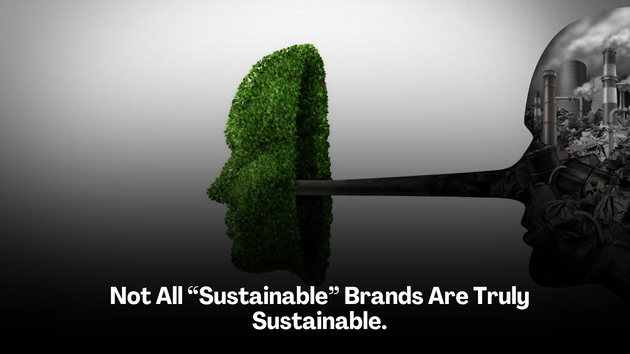
You just donated your old Zara dress to Zara Pre-Owned. You feel good. Responsible. Sustainable.
But what if that feel-good moment is exactly what Zara wants and has nothing to do with saving the planet?
Fast-fashion brands are now running their own resale platforms, slapping green labels on secondhand listings, and calling it the "circular economy." Meanwhile, production hasn't slowed by a single stitch.
This is greenwashing, and it's gotten sophisticated enough to fool even the most intentional shoppers.
"Over 60% of sustainability claims made by major fashion brands are misleading or entirely unsubstantiated." — Torrens University, 2025
What Is Greenwashing in Fashion?
Greenwashing is when a brand spends more money marketing itself as eco-friendly than it actually is.
In fashion, it shows up as vague labels like "conscious," "responsible," or "eco-collection" with zero third-party verification behind them.
The United Nations defines greenwashing as promoting false solutions to the climate crisis that distract from real, systemic change.
It's not always an outright lie. Sometimes it's a half-truth dressed in green packaging, which makes it harder to spot and even harder to call out.
Is Resale Fashion Actually Sustainable?
Here's the counterintuitive truth the resale industry doesn't want trending:
Yale University (2025) found that the secondhand market is actively expanding fashion's carbon footprint, not shrinking it.
Why? Because resale gives shoppers a guilt-free license to buy more. Researchers confirmed that secondhand shoppers purchase more total garments than non-resale shoppers, canceling out any environmental benefit.
The resale market is projected to hit $350 billion by 2027, but without reducing new production, that number just adds volume to an already overwhelmed system.
Resale isn't the enemy. But brand-owned resale, designed to protect profit margins while borrowing sustainability credibility, is the problem nobody's talking about loudly enough.
The Resale Greenwashing Playbook
Every major greenwashing resale campaign follows the same four-step formula:
- Step 1: Launch a resale arm with a feel-good name (Pre-Owned, Exchange, Marketplace)
- Step 2: Issue a press release about "commitment to circularity" and publish a glossy sustainability report
- Step 3: Keep producing at the same or higher volume with zero reduction targets
- Step 4: Let the green halo do the marketing while the core business model stays completely untouched
H&M took it a step further. Their garment collection program gave customers a discount coupon for a new purchase after donating old clothes, literally rewarding them for consuming more.
That's not a circular economy. That's a loyalty program hiding inside a recycling bin.
Who's Doing It & How
Zara: Zara Pre-Owned
- Claims a "circular fashion commitment" through peer-to-peer resale and repair
- Still produces billions of fast fashion units annually with no disclosed reduction targets
- Resale is a side revenue stream, not a production strategy
Shein: Shein Exchange
- Markets resale as "extending garment life."
- Simultaneously produces up to 10,000 new styles per day alongside the platform
- Exchange is a PR exercise built on top of the world's most polluting fashion model
H&M: Garment Collection Program
- Promotes "closing the loop" through in-store donation bins
- Issue new-purchase discount coupons to donors, incentivizing more buying, not less
PrettyLittleThing: PLT Marketplace
- Positions as a "sustainable resale community."
- Continues selling garments as low as $4 in its main storefront
- Notice the pattern: Not one of these platforms requires the brand to produce less. That's the tell.
Real vs. Fake Sustainability:
Greenwashing Red Flags:
- Vague language like "conscious," "responsible," or "better" with no data behind it
- Self-created "Eco Line" or "Green Collection" labels with no third-party audit
- New styles launching weekly, while a resale arm runs in parallel
- No published supplier list or supply chain transparency report
- Resale platform that cross-sells new items on the same page
Genuine Sustainability Signals:
- Certifications: GOTS, Fair Trade, B Corp, OEKO-TEX, all require external verification
- Specific recycled content percentages backed by audit documentation
- Capped seasonal collections with no mid-season drops
- Repair and aftercare services are offered alongside resale
- If a brand can't tell you exactly what makes it sustainable, it probably isn't.
FAQ’s
Q1: Is Zara Pre-Owned actually sustainable?
Zara Pre-Owned does extend individual garment life, which is a marginal positive. But Inditex still produces billions of units of fast fashion annually without any disclosed production-reduction targets. Launching a resale platform without slowing core output doesn't qualify as systemic sustainability. It qualifies as smart marketing.
Q2: What's the difference between slow fashion and intentional dressing?
Slow fashion is a movement focused on ethical production and transparent supply chains. Intentional dressing is a personal practice, buying less, choosing mindfully, and resisting trend cycles regardless of where the garment comes from. Both matter, but intentional dressing is something you can control starting today.
Q3: Which resale platforms are genuinely sustainable?
Independent platforms like ThredUp, Depop, Vinted, and The RealReal are more credible; they have no incentive to sell you new items alongside secondhand ones. Brand-owned resale platforms exist within an ecosystem engineered to drive new purchases, not prevent them.
Dress Smarter, Not Just Greener
The most sustainable outfit is the one already hanging in your wardrobe.
Before you let a brand's resale platform make you feel virtuous, ask what they're doing about the 10,000 styles they dropped this week.
Real sustainability isn't a feature you add on. It's a foundation you build from.